 Tierline Retaining Walls
 Concrete Sleeper Walls
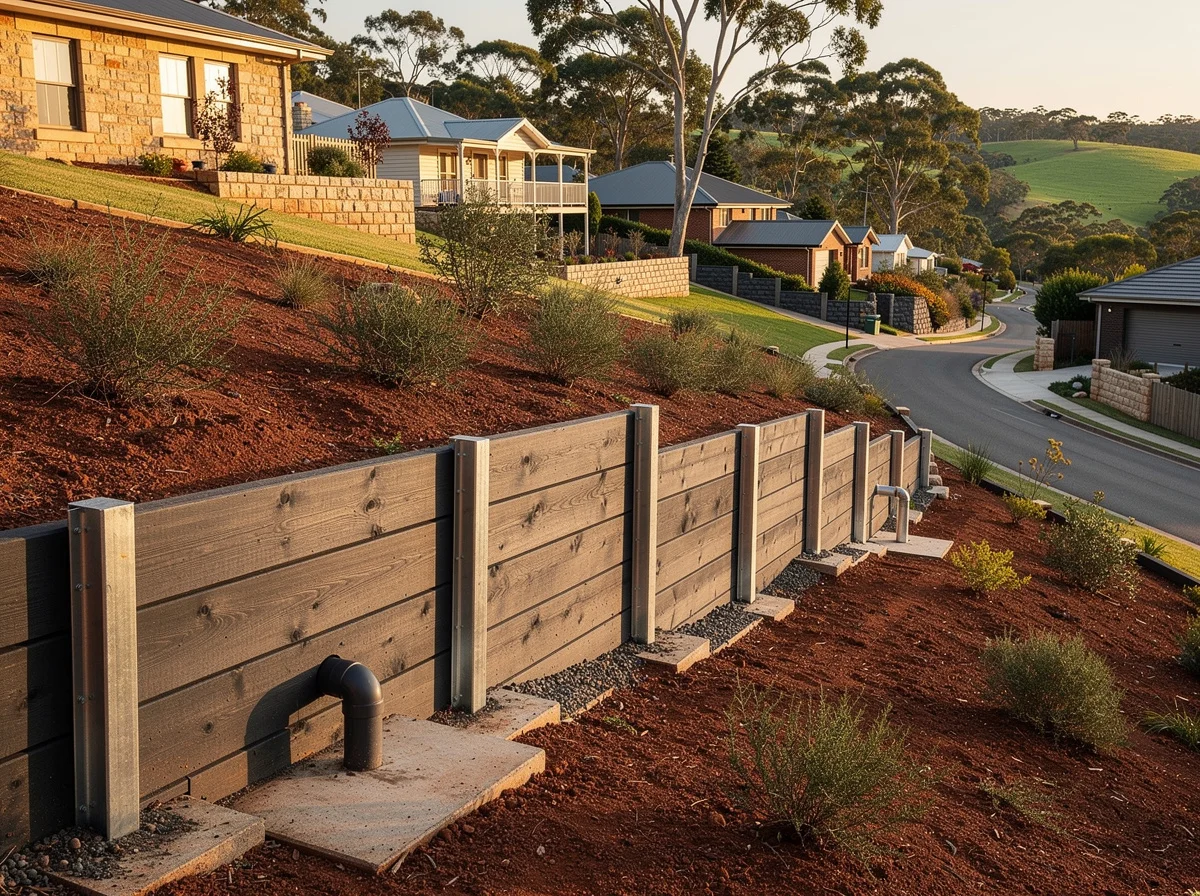
Concrete sleeper is the volume product on Adelaide Hills blocks for good reason: steel-reinforced sleepers drop between galvanised C or H-section posts set in concrete footings, they do not rot like timber, and they handle the heights and slopes the Hills throw at them. We size the post footings to the soil and the height, drain the full length behind the wall, and rake it to follow the contour, so there are no gaps underneath and nowhere for water to build up.
What this job includes.
- ✓Steel-reinforced concrete sleeper walls, new and replacement
- ✓Galvanised C and H-section posts set in concrete footings to depth
- ✓Footings sized for reactive clay, fill and sloping ground
- ✓Ag-pipe, aggregate and weep holes drained the full length
- ✓Posts stepped down the fall and the wall raked to the contour
A concrete sleeper wall lives or dies on its post footings
A concrete sleeper wall looks like a finish job, and it is actually a post- footing job. The visible sleepers are the easy part. The thing that decides whether the wall is dead straight in twenty years, or bulging out over the garden after the third winter, is what is in the ground: how deep the galvanised C or H-section posts go, how wide the concrete footing is, and whether the ag-pipe and aggregate behind it can move water away when the clay tries to push the wall out. We dig the posts to the depth the height and the soil call for, set them in concrete footings sized to the wall, and only then drop the steel-reinforced sleepers between them.
What changes when the soil is reactive Hills clay
Most of the Adelaide Hills sits on reactive clay that shrinks in summer and swells hard in winter. A pair of posts in a 600 mm hole that suits a stable loam block is the same wall that leans out over the lawn on a Stirling or Aldgate slope. We size the post embedment for the height of the wall and the soil classification, and we step the footing diameter and the post section up where the height climbs or the slope works against us. The embedment, the post section and the footing dimensions are all named on the quote, not assumed.
What an itemised concrete sleeper quote includes
- The wall measured by the face-metre (length by height), priced per face metre with the height and the post centres named
- The galvanised post section (C or H, 100 mm or 125 mm) and the post embedment depth in concrete
- The footing diameter and the depth of the concrete around each post
- The steel-reinforced sleeper supplier and profile (smooth, woodgrain or geo-stone), named on the page
- The ag-pipe along the base, the free-draining aggregate behind the wall, the weep holes through the base course where they apply, and the geofabric to stop the soil clogging the drainage
- The structural engineer design and the council development approval line where the wall retains over a metre
- The excavation, the access on a steep or tight block, and the tip fees for the spoil, each their own line
- The 10-year structural and drainage warranty, in writing
Two quotes for “a 15 metre concrete sleeper wall” can be six thousand dollars apart and both be honest, because one of them is naming shallower post footings and no ag-line for a wall that is going to fail on the same slope where the deeper-footing, drained wall stays put. The line items above are how you compare the same wall to the same wall.
Priced by the face-metre, itemised line by line.
The face-metres and height, the material and the footing named, the drainage as its own line, the engineering and council line if it is over a metre, excavation and access, and the boundary note if the wall holds up a neighbour. Not one round number for a wall.
- 1 Face-metres, height and material. The price broken down by face-metres and the wall height, with the material named: concrete sleeper, core-filled besser, timber, link-block or stone. Not one round number for "a retaining wall".
- 2 The footing and reinforcement. The footing sized to the wall and the soil: a reinforced concrete footing for besser, concrete-set posts dug to depth for sleeper walls, with the reinforcement named. This is the line cowboys skip.
- 3 The drainage, as its own line. The ag-pipe (subsoil drain) along the base, the free-draining aggregate backfill, the weep holes and the geofabric. Trapped water is the number one reason walls fail, so the drainage is on the quote, not left off.
- 4 The engineering and council line. If the wall retains over a metre, the structural engineer design and certification and the council development approval, itemised, with a realistic approval timeline, not folded into a round number.
- 5 Excavation and access. The cut, the machine access on a steep or tight block, the spoil carted away and the tip fees, each a line, never sprung on you at the end.
- 6 The boundary-cost note. If the wall holds up a neighbour boundary, a plain-English note on how the cost usually falls (the benefit / whose-land-is-retained rule), so you can have the conversation. General guidance, not legal advice.
- 7 Warranty and compliance. The 10-year structural workmanship and drainage warranty in writing, and the AS 4678 / NCC compliance with the engineer design where the height needs it.
What happens, step by step.
Free site assessment and soil
We come to the block, measure the fall and the slope, check the soil and the access, and talk through material and height, then put a written quote in your hands.
Engineer design where the height needs it
For a wall over a metre or under a surcharge, the structural engineer designs it to AS 4678 and we lodge the council development application, so it is signed off before we dig.
Itemised quote and start date
The honest quote: face-metres, height and material, the footing, the drainage, the engineering line, excavation and the boundary-cost note. You sign off and we book the dig.
Footings and posts
We excavate, then size and set the footings: a reinforced concrete footing for besser, concrete-set posts dug to depth for sleeper walls. The footings cure before the wall goes up.
Drainage and wall build
The ag-pipe and free-draining aggregate go in behind the wall as it is built, with weep holes and geofabric, so water drains away instead of building up. Then the wall is built to height.
Backfill, finish and handover
We backfill and finish, clear the site, walk you around the wall, and hand over the warranty in writing and the engineer certification and approval paperwork where it applies.
The paperwork behind the price.
Public liability to $20M, and a 10-year structural warranty, all in writing, all on request.
We hold a South Australian builder’s licence, we build every wall to AS 4678 and the NCC, and we carry public liability insurance, so you are covered on site. For a wall over a metre, or one holding up a driveway or a building, we bring the structural engineer’s design and certification and handle the council development approval. The guarantee is a 10-year structural warranty, in writing, covering the structural workmanship and the drainage, the parts that fail first. All in writing, with exclusions named.
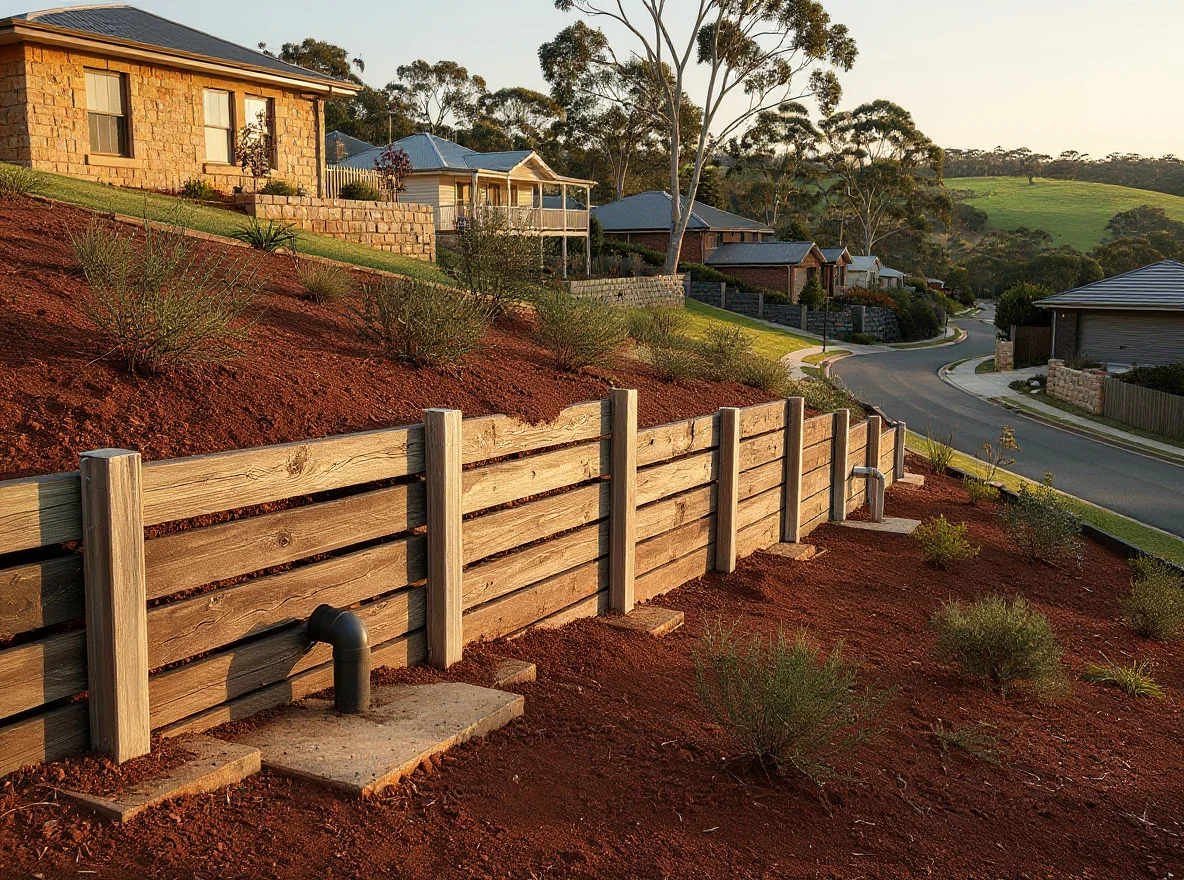
Concrete Sleeper Walls jobs we’ve done.
Concrete Sleeper Walls: common questions.
Why are concrete sleepers so popular on the Hills?
How deep do the posts go?
Can concrete sleepers follow a slope or a curve?
Do concrete sleeper walls need drainage too?
Get a free, itemised quote you can actually read.
Tell us what you need. We’ll book a walkthrough and send a quote with the work itemised, not just a number.